Raymond Davey Raymond Davey
Science and History Author

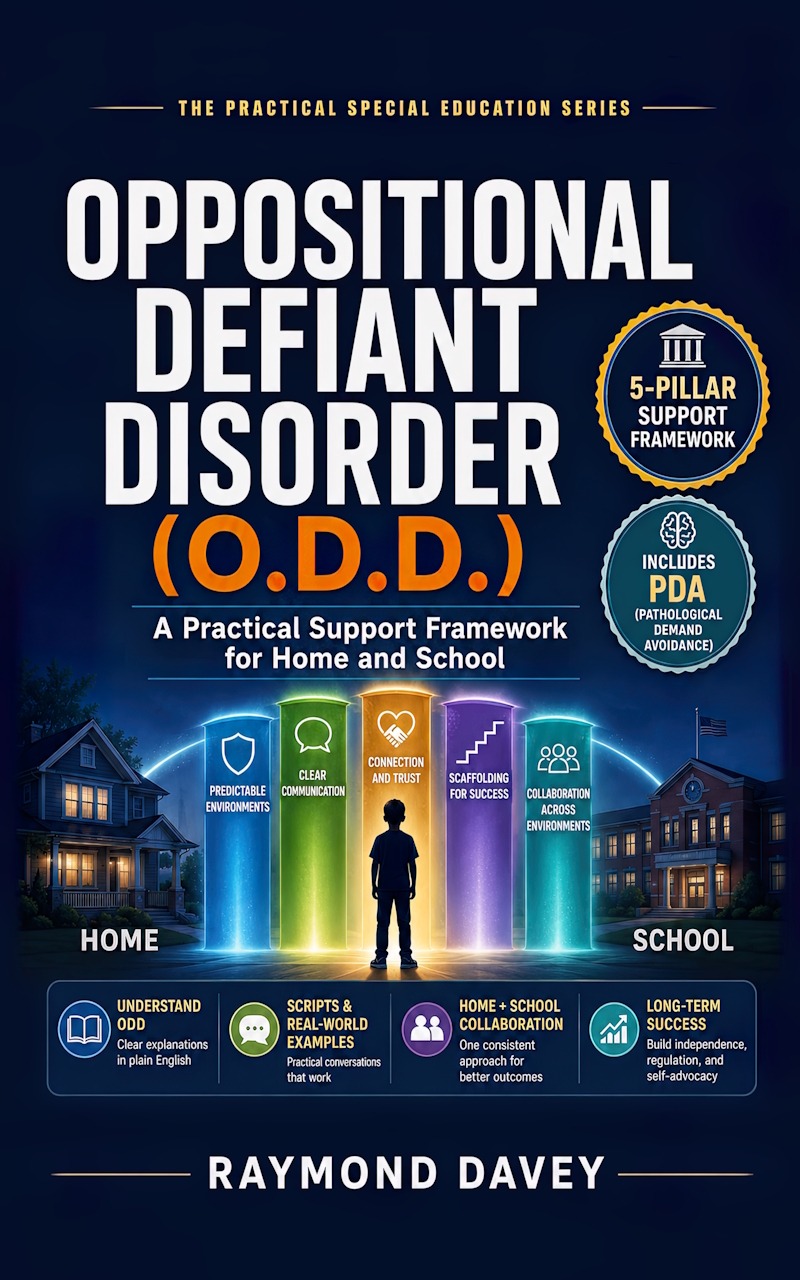
Oppositional Defiant Disorder (O.D.D)
A Practical, Compassionate Guide to Understanding and Supporting Children with Oppositional Defiant Disorder (ODD)
If you’re caring for a child who argues constantly, resists every request, or explodes without warning, you already know how challenging Oppositional Defiant Disorder can be. Traditional discipline doesn’t work. Logical consequences don’t help. And even well-meaning advice often makes things worse.
This book gives you a roadmap that finally makes sense.
Drawing from neuroscience, special education practice, and real-life case studies, this book explains why children with ODD behave the way they do, and exactly what adults can do to help.
What You’ll Learn Inside This Book
– Clear explanation of Oppositional Defiant Disorder (ODD) and how it develops
– What ODD feels like from the child’s perspective
– The 5-Pillar Support Framework that reduces conflict and builds trust
– How to create predictable environments that calm the nervous system
– Communication strategies that prevent power struggles
– Scaffolding tools that build competence without triggering resistance
– How to collaborate among home, school, and therapy settings
– Real-world scripts and sample conversations
– Long-term plans for independence, emotional regulation, and self-advocacy
Who This Book Is For
Parents looking for relief and clarity
Teachers supporting children with chronic defiance
Special educators and clinicians seeking practical tools
Anyone who wants to understand ODD beyond stereotypes and misconceptions
Why This Approach Works
Instead of focusing on compliance, this book focuses on connection, clarity, and neuroscience-based support. You’ll learn how to reduce oppositional behavior without escalating power struggles and how to help children develop the skills they need to succeed long-term.
Oppositional Defiant Disorder doesn’t define a child’s future.
With the right support, every child can thrive.
Other Books in the Series
Clear frameworks for real-world learning
These books focus on practical understanding. Breaking down learning challenges, cognitive differences, and classroom realities into clear, usable structures.
Designed for teachers, parents, and learners, they prioritize what works in practice, with an emphasis on clarity, structure, and application.