Raymond Davey Raymond Davey
Science and History Author

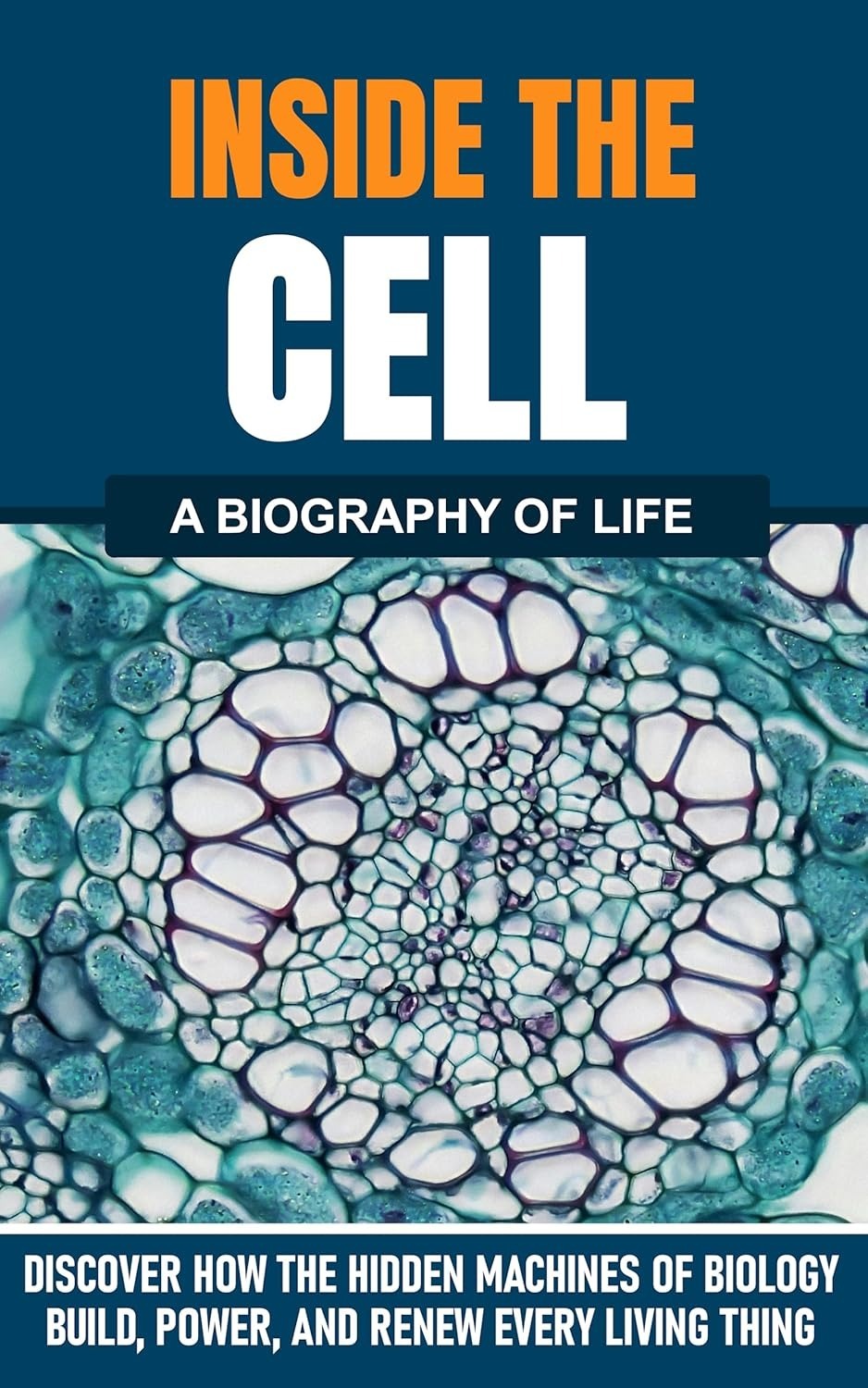
Inside the Cell. A Biography of Life
The Architecture of Life
A Narrative History of the Cell
From the first cork cell to the digital cell, this is a 400-year journey into how humanity learned to understand life’s smallest unit.
In 1665, Robert Hooke coined the word cell after peering through a handmade microscope. He could not have imagined that those tiny compartments would reveal the molecular engines of life. The Architecture of Life tells that story from candle-lit laboratories to modern supercomputers predicting the shapes of proteins and simulating entire living systems.
Across twenty concise chapters, this book blends narrative history with modern biology to explain how cells build, communicate, repair, and coordinate. You will meet the scientists who uncovered life’s hidden machinery — from early microscopists to the researchers mapping genomes, designing synthetic organisms, and constructing digital models of living cells.
Important note for readers:
This book is written in a narrative, concept-driven style rather than as a traditional illustrated biology textbook. It focuses on ideas, connections, and historical development, and is designed to be read as a coherent story rather than used as a technical reference. Readers looking for a fully illustrated academic text with formal citations may prefer a conventional university textbook.
Unlike books that focus solely on genes, this work places the cell itself at center stage — a living network where energy, information, and cooperation give rise to higher organization. It moves from microscopes to molecules to minds, tracing how trillions of cells form the coordinated system that is you.
This book will appeal to readers who enjoyed:
The Gene – Siddhartha Mukherjee
Life Ascending – Nick Lane
The Body – Bill Bryson
The Song of the Cell – Siddhartha Mukherjee
The Tangled Tree – David Quammen
Other Books in the Series
How life works, from the inside out
These books explore the systems that make life possible. Cells, development, immunity, energy, and the underlying processes that sustain every living organism.
Each one reconstructs complex biology as a clear, continuous narrative, focusing on how it works rather than just what it is. The aim is not simplification, but understanding.