Raymond Davey Raymond Davey
Science and History Author

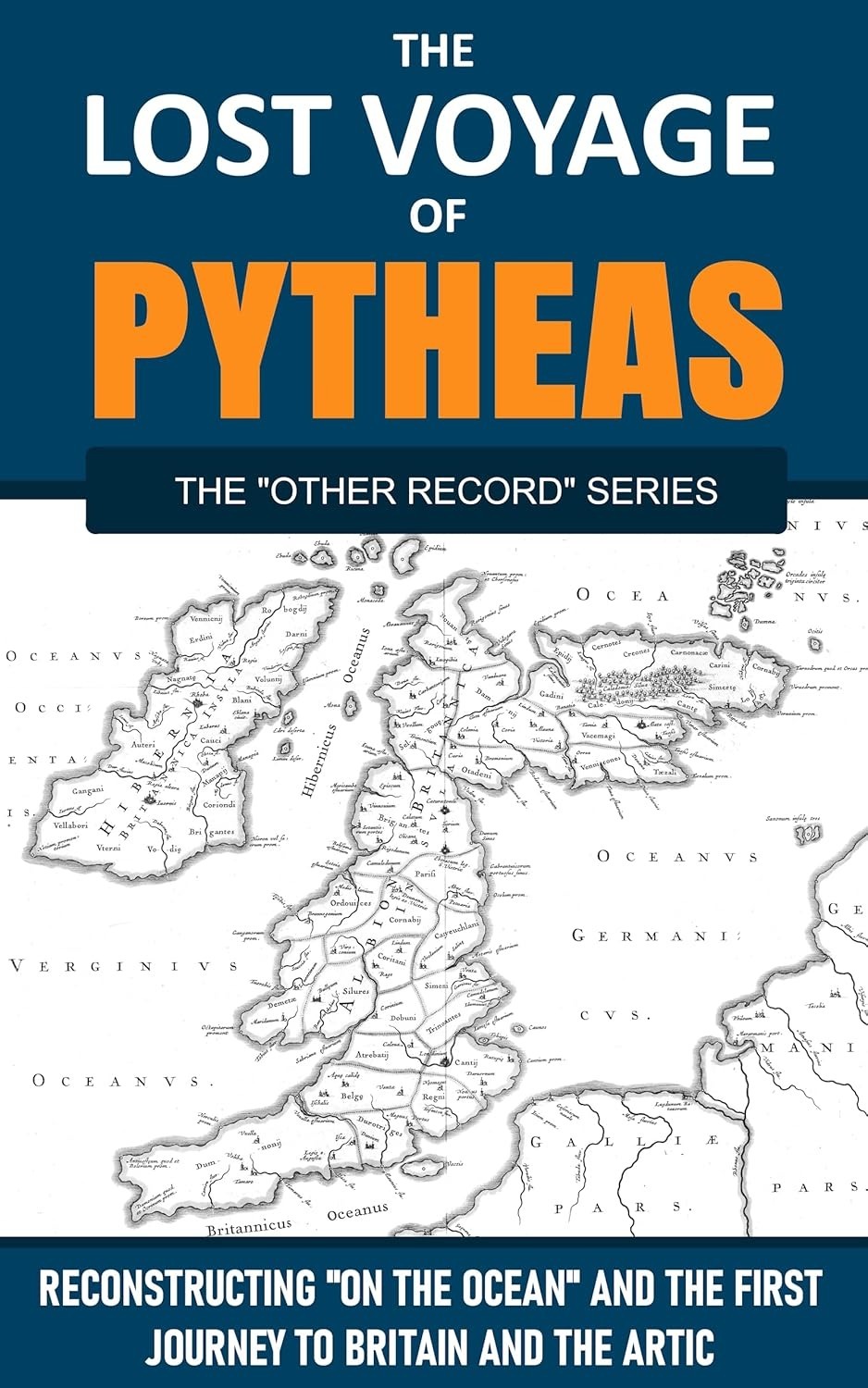
The Lost Voyage of Pytheas
The greatest explorer you’ve never heard of sailed to Britain and the Arctic 300 years before Caesar, and everything he wrote was lost.
Around 325 BCE, a Greek navigator named Pytheas of Marseille made one of the most extraordinary journeys in human history. He sailed beyond the known world, reached Britain, pushed north to a land of midnight sun he called Thule, and encountered a frozen sea he could neither cross nor fully describe. He wrote it all down in a work called On the Ocean.
Then it vanished.
What remains are fragments scattered across the writings of ancient authors who mostly despised him, quoted him to destroy him, and in doing so accidentally preserved him. Strabo called Pytheas “the greatest liar” in geographical literature. He also happens to be our single largest source of what Pytheas actually said.
The Lost Voyage of Pytheas reconstructs the voyage from those fragments. Not as a retelling, not as historical fiction, but as a careful forensic investigation. Each chapter works from what the surviving evidence actually says, distinguishing between what Pytheas witnessed firsthand and what he reported from informants, between what hostile critics inadvertently confirmed and what remains genuinely uncertain.
What emerges is startling. Pytheas measured Britain’s circumference to within 15% using dead reckoning and a wooden rod. He was the first Greek to link tides to the lunar cycle. He documented tin mining in Cornwall with a precision that archaeology has since confirmed. He observed Arctic sea ice and described it in terms that modern polar scientists immediately recognize. And the astronomers who came after him (Eratosthenes, Hipparchus) quietly used his data while the literary establishment called him a fraud.
This book is unlike anything else in ancient history or travel writing. It is not a biography and not a narrative retelling. It is a piece of detective work: reading hostile testimony against itself, extracting observation from denunciation, and recovering what can still be known from what was almost destroyed.
For readers of ancient history, the history of exploration, the history of science, and the archaeology of Britain and northern Europe.
Includes a complete Fragment Catalogue of all surviving primary source material.
Other Books in the Series
Recovering what survives in fragments
Some of the most important events, systems, and texts do not survive directly. They exist in fragments. Quoted, distorted, or preserved by those who had reason to reshape them.
These books reconstruct those worlds by working from the surviving evidence, separating what is observed, what is inferred, and what remains uncertain. The result is not retelling, but recovery.